When children today learn about World War 2, they often hear about battles, planes and famous leaders. But what was life like for children in the Second World War back home in Britain?
For millions of boys and girls, the war changed almost everything: where they lived, what they ate, how they went to school and even what they carried with them every day. Some were sent to live with strangers in the countryside. Others stayed in towns and cities and got used to sirens, blackouts and nights in air-raid shelters.
With Remembrance Day coming up on 11 November, it's a wonderful time to explore the home front with your family. Let's find out what everyday life was really like for children during the Second World War.
A Very Different Childhood
Britain declared war on Germany on 3 September 1939, and the war lasted until 1945. Almost straight away, the government began preparing for air raids on Britain's towns and cities. Children were at the heart of many of those plans, because keeping them safe was one of the biggest worries of all.
During the war, many British children:
- ✦
Were evacuated away from their families to the countryside
- ✦
Carried a gas mask wherever they went
- ✦
Lived with food rationing for years
- ✦
Helped with salvage drives and growing vegetables
- ✦
Spent nights sheltering from air raids
Evacuation: Leaving Home
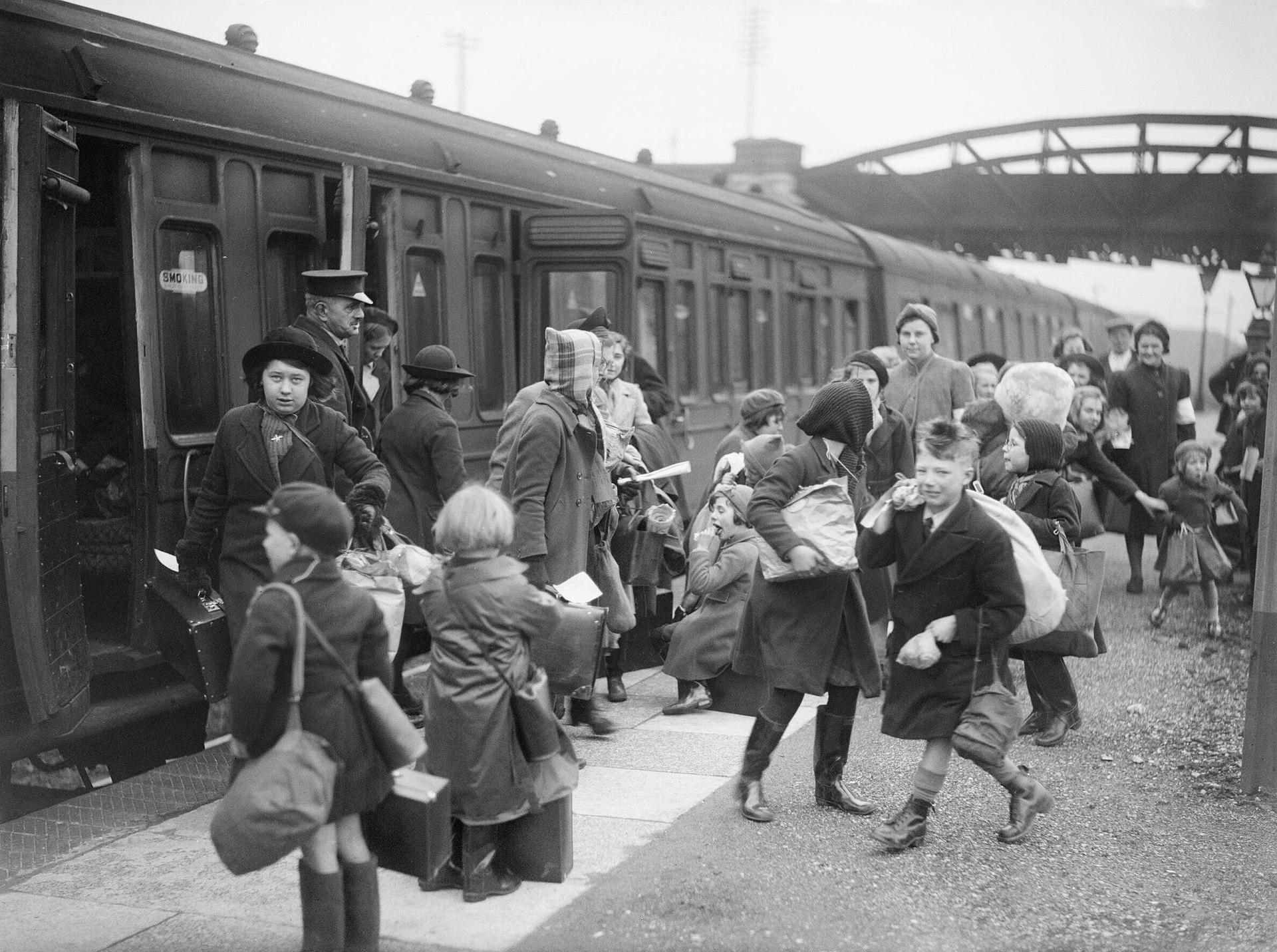
Just before war was declared, the government launched a huge evacuation scheme, often known as Operation Pied Piper. Starting on 1 September 1939, around 1.5 million people, most of them schoolchildren, were moved out of cities such as London, Liverpool and Manchester in just a few days. Mothers with babies, teachers and some other adults travelled too.
Evacuees usually:
- ✦
Gathered at their school and walked together to the railway station
- ✦
Wore a brown luggage label with their name and school on it
- ✦
Carried a small bag or suitcase, a packed lunch and their gas mask in a cardboard box
- ✦
Had no idea where they were going until they arrived
When they reached their new town or village, children were taken to a local hall where families chose who they would look after. These hosts were often called "foster parents". Some evacuees had a wonderful time, discovering farms, fields and fresh air for the first time. Others felt homesick and found it hard to settle with strangers.
At first, few bombs fell on Britain, and this quiet period became known as the "Phoney War". Many evacuees went back home. But when heavy bombing began in 1940, a new wave of evacuations took place.
A Royal Message for Evacuees
On 13 October 1940, 14-year-old Princess Elizabeth (who later became Queen Elizabeth II) made her very first radio broadcast. Speaking on the BBC's Children's Hour with her younger sister Margaret, she sent a message of comfort to children who had been evacuated from their homes, including those who had been sent overseas.
Gas Masks and Blackouts
Before the war began, the government feared that enemy planes might drop poison gas, so gas masks were given out to people across Britain. Children were expected to carry theirs to school every day, and they practised putting them on during gas drills.
Younger children were given a brightly coloured mask nicknamed the "Mickey Mouse" mask, designed to look less frightening. Babies had special gas helmets that a grown-up pumped air into. Thankfully, poison gas was never used on Britain during the war.
Children also had to get used to the blackout. Every evening, windows had to be covered so that no light could be seen from above, and street lamps were switched off. Walking home on a winter evening could be very dark indeed!
Air Raids and Shelters
For children who stayed in towns and cities, air raids became part of life. When the warning siren sounded, families hurried to a shelter. These included:
- ✦
Anderson shelters: Curved metal shelters half-buried in the back garden and often covered with soil, where families might grow vegetables on top.
- ✦
Morrison shelters: Large steel cages that doubled as a table indoors. Children sometimes slept underneath them.
- ✦
Public shelters: Including London Underground stations, where crowds of people bedded down on the platforms.
Many children remembered the "all clear" siren with relief, and some collected pieces of shrapnel the next morning to swap with friends at school.
Rationing: What Did Children Eat in WW2?
Britain imported much of its food by sea, and enemy submarines attacked supply ships. To make sure food was shared fairly, rationing began on 8 January 1940. Bacon, butter and sugar came first, followed by meat, tea, cheese, eggs and more.
Every person, including children, had a ration book with coupons that had to be handed to the shopkeeper. Families made the most of what they had with dishes such as:
- ✦
Vegetable stews and pies
- ✦
Bread and dripping
- ✦
Dried egg, which came as a powder
- ✦
Carrot cake and puddings sweetened with carrots instead of sugar
Sweets were rationed from July 1942, which was a real blow for children! To keep children healthy, the government provided extra milk, orange juice and cod liver oil for young children.
Amazingly, sweet rationing didn't finally end until February 1953, long after the war was over.
How Children Helped the War Effort
Children weren't just watching the war from the sidelines. They found plenty of ways to help, including:
- ✦
Digging for Victory: Helping to grow fruit and vegetables in gardens, parks and school grounds.
- ✦
Make Do and Mend: Repairing clothes, knitting socks and scarves for soldiers and turning old clothes into new ones.
- ✦
Saving money: Buying savings stamps to help pay for the war.
School, Toys and Games
School life was often disrupted. When evacuation began, many city schools closed, and evacuees sometimes shared village schools with local children, taking turns to use the classrooms. Lessons could be interrupted by air-raid drills, and pupils learned what to do if the siren sounded.
Because metal and other materials were needed for the war, new toys were hard to find. Children made their own fun with:
- ✦
Homemade wooden toys and knitted dolls
- ✦
Comics, books and the radio
- ✦
Games such as marbles, hopscotch, skipping and conkers
- ✦
Playing war games and spotting the shapes of different aircraft
Many children also joined groups such as the Scouts, Guides, Brownies and Cubs, which took part in war work like collecting salvage.
Remembering Children of the Second World War
Life for children in WW2 could be frightening, tiring and confusing, but their stories are also full of courage, kindness and resilience. Learning about them is a gentle and meaningful way to talk about Remembrance with children.
You could ask your child:
- ✦
What would you pack in your suitcase if you were being evacuated?
- ✦
How would you feel about living with a family you had never met?
- ✦
Could you plan a day of meals using a wartime ration?
- ✦
What do you think a WW2 child would find most surprising about your life?
Continue Your WW2 Adventure
Want to help your child discover even more about the Second World War? Mysteries in Time brings history to life by pairing an exciting storybook with a colourful history fact magazine, so children can enjoy an adventure and learn the real history behind it at the same time.
Explore our WW2 adventure and the rest of our history collection at Mysteries in Time.