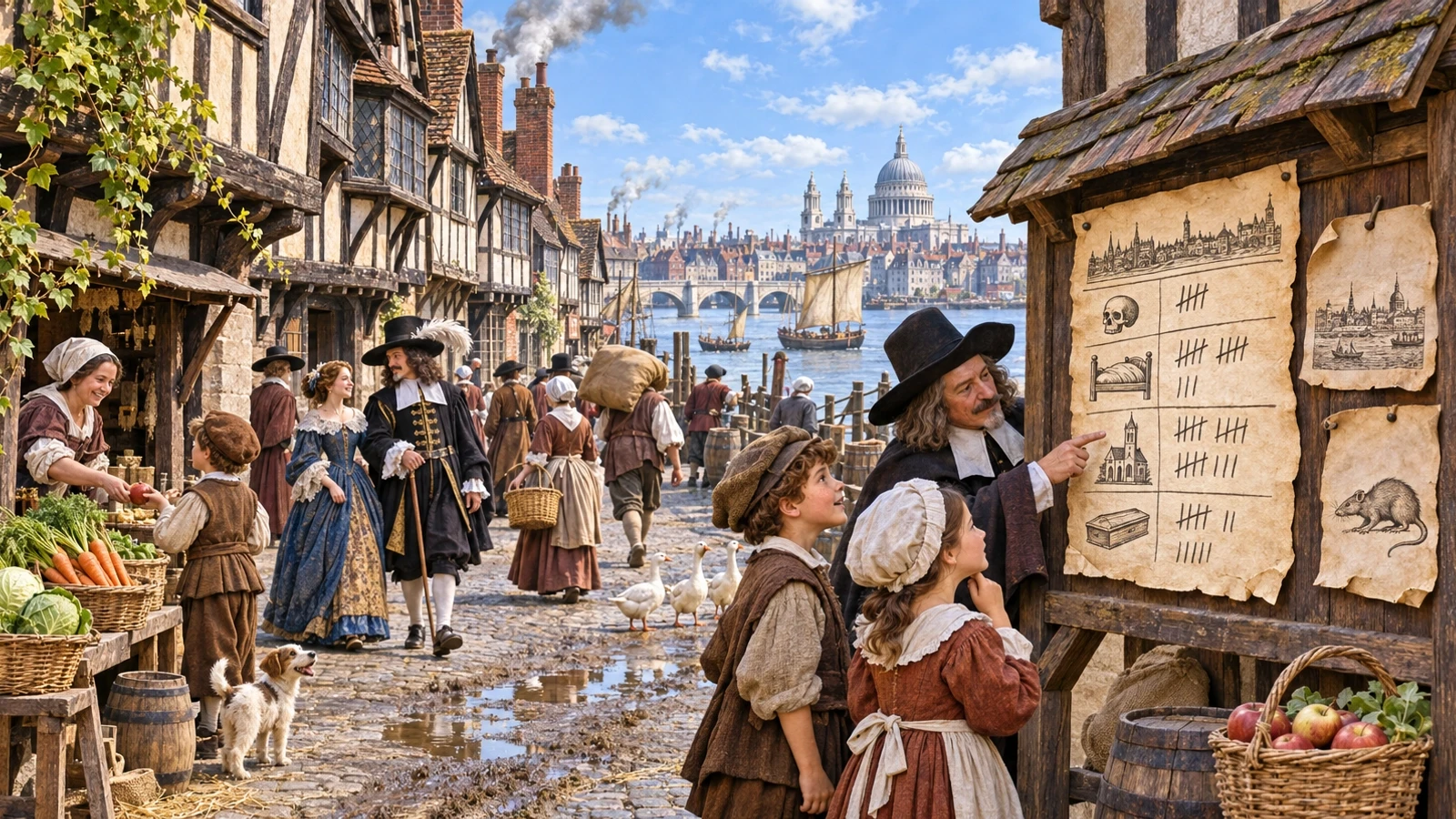
A historical London street scene in 1665 with timber-framed houses and people in 17th century clothing, with a Bill of Mortality notice board
πŸ€Stuarts EraπŸ€

The Great Plague of London for Kids πŸ€

Stuart History!

In 1665, a terrible disease swept through London. It was called the plague, and it spread so quickly that it became known as the Great Plague. It was the last big outbreak of plague in England – and just a year later, London faced another disaster: the Great Fire!


A Mystery Disease!

🦠 What Was the Plague?

The plague was a deadly disease caused by tiny germs called bacteria. People who caught it got a high fever and painful swellings. In 1665 nobody knew what caused it. We now know it was spread by fleas that lived on black rats, and scientists think human fleas and lice may have helped spread it too.


Crowded Streets!

πŸ™οΈ Why Did It Spread So Fast?

Stuart London was crowded and dirty. Rubbish and waste filled the narrow streets, especially in the poorest areas, which attracted rats – and their fleas. The plague began in the spring of 1665, and by late summer it was spreading all over the city.


Shut Up Houses!

✝️ Red Crosses on the Doors

To try to stop the plague, houses where someone was ill were shut up, with everyone inside – sick or healthy – kept in. A red cross was painted on the door, along with the words β€œLord have mercy upon us”. The diary writer Samuel Pepys wrote about seeing these red crosses in Drury Lane.


Bills of Mortality!

πŸ“Š Counting the Deaths

Each week, parish clerks wrote lists called the Bills of Mortality, recording how many people had died and why. At the worst point, in September 1665, more than 7,000 people died from plague in a single week. Many people who could afford it – including lots of doctors, lawyers and merchants – left London for the countryside. In all, around 100,000 people may have died – almost a quarter of everyone living in London.

Want your child to go further? Our Stuarts pack has a story, magazine and activities


Brave Eyam!

🏑 The Brave Village of Eyam

The plague reached the small village of Eyam in Derbyshire in 1665, carried in a parcel of cloth from London that was full of fleas. The villagers made a brave decision: they cut themselves off from the outside world so the plague wouldn't spread to nearby towns and villages. Many of them died, but their sacrifice helped protect others.


The End?

πŸ“‰ How Did the Plague End?

In December 1665, the number of deaths suddenly fell, and it kept falling through the winter. Historians aren't completely sure why. Some think a very cold winter killed the fleas; others think the rats were becoming resistant to the disease.

Amazing Fact!

πŸ’‘ Did You Know?


Take The Great Plague Further

Bring Stuart history to life at home or in the classroom with our Stuarts packs.

At home

Want your child to go further? Our Stuarts pack has a story, magazine and activities

Get the Stuarts pack
In the classroom

Teaching Stuarts? Our Stuarts classroom pack has lessons, a class wall map and timeline

Get the classroom pack

Teaching this at home? Explore our secular homeschool history curriculum for ages 6–11.