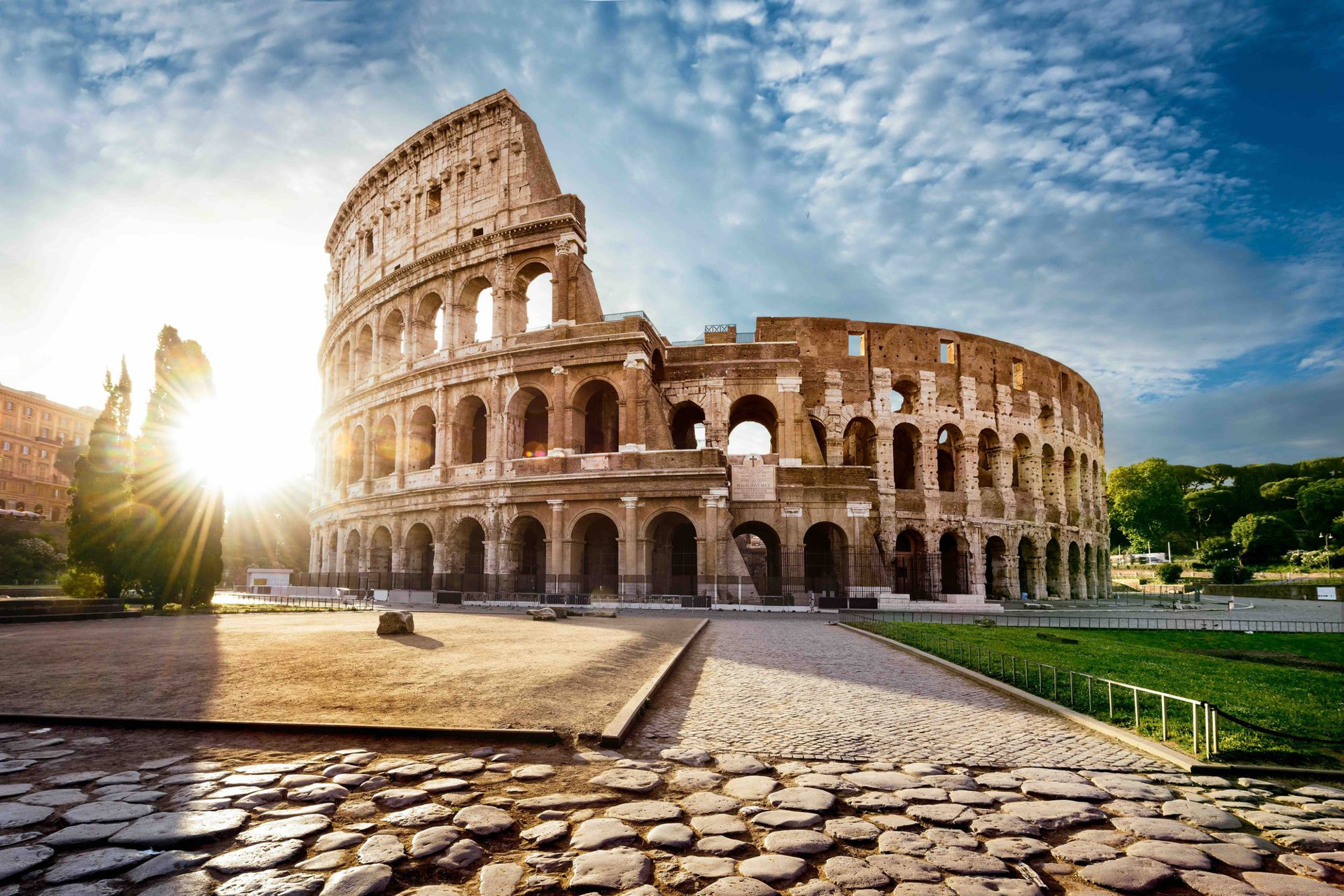
Mount Vesuvius above the Bay of Naples in Italy, the volcano that buried the Roman town of Pompeii β€” artwork style hero image reused from the Ancient Rome hub
πŸŒ‹Ancient RomeπŸ›οΈ

Pompeii for Kids

A Roman Town Frozen in Time

What Was Pompeii?

Pompeii was a busy Roman town near Naples, in Italy, close to a huge volcano called Mount Vesuvius. It was full of shops, bakeries, temples, houses and people going about their everyday lives β€” a little like your own town or village, but with togas, carts and mosaic floors!

In AD 79, Mount Vesuvius erupted and buried the whole town under a thick blanket of ash. Because the ash sealed everything so quickly, Pompeii was preserved like a time capsule β€” with its streets, shops, paintings and even loaves of bread still waiting to be discovered nearly 2,000 years later.

Today you can walk along Pompeii's ancient streets and see exactly what daily life was like for Roman kids and families thousands of years ago.

πŸ›οΈπŸ›οΈπŸ›οΈπŸ›οΈπŸ›οΈ

Everyday Life

What Was Life Like in Pompeii?

Imagine waking up in Pompeii. You'd step out of your house onto streets paved with big, flat stepping stones. Romans used them to hop across muddy water and puddles without getting wet β€” and you can still see the grooves worn into the stones by carts!

The town was noisy and busy. Bakeries turned out fresh loaves of bread using huge stone mills, and takeaway food counters called thermopolia served hot stews and drinks to hungry shoppers. After a day of wandering, families could relax in the baths, and everyone loved cheering at the amphitheatre.

Pompeii's walls were covered in graffiti β€” jokes, drawings, election posters and little messages left by everyday people, a bit like ancient social media. Inside homes, families walked on colourful mosaics made of tiny tiles. The most famous one greeted visitors at the door with a picture of a dog and the words β€œBeware of the dog”!

  • πŸͺ¨Stepping stones let people cross the streets without splashing through puddles
  • 🍞Bakeries milled flour and baked fresh bread every day
  • 🍲Thermopolia were Roman takeaway counters serving hot food and drinks
  • 🏟️The amphitheatre held sports, shows and cheering crowds
  • ✍️Graffiti on the walls shared jokes, poems and messages
  • πŸ•A mosaic at the front door warned visitors: β€œBeware of the dog”
πŸ›οΈπŸ›οΈπŸ›οΈπŸ›οΈπŸ›οΈ

The Eruption of AD 79

What Happened When Vesuvius Erupted?

In AD 79, Mount Vesuvius suddenly erupted. First, ash and pumice β€” light, spongy volcanic rock β€” rained down on Pompeii for hours, like grey snow. Roofs grew heavier and heavier as the ash piled up, and many people hurried away from the town while they still could.

Later, fast-moving clouds of hot ash swept down from the volcano. The town was buried under several metres of ash β€” deep enough to hide the rooftops completely. Many people escaped before the worst of the eruption, but some were caught in the town and did not get away.

Historians traditionally said the eruption happened on 24 August AD 79 β€” that date comes from the Roman writer Pliny the Younger. But newer clues, like a piece of charcoal with an autumn date and autumn fruits found in the ash, suggest it may actually have happened later, in October, in autumn.

  • ❄️Ash and pumice fell for hours, covering roofs and streets
  • ☁️Hot ash clouds then swept down the volcano
  • 🏠Pompeii was buried under several metres of ash
  • πŸ“…Traditionally dated to 24 August, but evidence hints at autumn AD 79
πŸ›οΈπŸŽ­πŸΊπŸ¦…πŸ›οΈ

An Eyewitness Story

How Do We Know What Happened?

We know so much about the eruption because one young Roman actually watched it happen and wrote it down. His name was Pliny the Younger, and he was watching from across the bay in a town called Misenum, safely away from the volcano.

Pliny described the huge cloud rising above Vesuvius, the falling ash and the panic in the streets. Later, he wrote two detailed letters to a historian named Tacitus, telling him exactly what he saw β€” it's like a Roman news report from the scene.

Pliny's uncle, Pliny the Elder, was brave enough to sail his ships towards the volcano to try to help people escape. He is remembered as a hero who put others first.

πŸ›οΈπŸ›οΈπŸ›οΈπŸ›οΈπŸ›οΈ

Found Again

How Was Pompeii Found Again?

For hundreds of years, Pompeii lay hidden under the ash, and almost everyone had forgotten it was there. Then, in 1748, workers digging in the area found walls with paintings on them β€” and realised they had stumbled on a lost Roman town.

Archaeologists began carefully digging up the town, layer by layer. It was slow, careful work, because every object told a story. In the 1860s, a clever archaeologist named Giuseppe Fiorelli made plaster casts from the empty hollows left in the ash, showing the shapes of people, dogs and objects that had long since crumbled away.

Today Pompeii is a UNESCO World Heritage Site, and visitors can walk its streets, peek into shops and houses, and see mosaics and wall paintings just as they were nearly 2,000 years ago. Nearby, the town of Herculaneum was also buried by Vesuvius and has been uncovered.

  • ⛏️Pompeii was rediscovered and dug up from 1748 onwards
  • πŸ—ΏIn the 1860s, Giuseppe Fiorelli made plaster casts from hollows in the ash
  • πŸ›οΈToday it is a UNESCO World Heritage Site you can walk around
  • 🏘️Neighbouring Herculaneum was also buried and uncovered

Did You Know?

Fun Facts About Pompeii

Pompeii is full of surprising details. Here are our favourite facts for curious explorers.

Bread for Sale

Archaeologists found charred loaves of bread in Pompeii bakeries β€” you could almost have bought one for lunch!

Ancient Social Media

Walls were covered in graffiti: jokes, poems, drawings and election posters written by everyday Romans.

Beware of the Dog

One house had a mosaic of a dog at the entrance warning visitors to be careful!

Stepping Stones and Cart Ruts

Streets had stepping stones and deep grooves where cart wheels rolled β€” an ancient zebra crossing!

Older Than the Colosseum

Pompeii’s amphitheatre was built around 70 BC β€” over 100 years before Rome’s Colosseum!

Roman Takeaways

Thermopolia were takeaway counters where people could buy hot soup, stew and wine.

Colours That Lasted

Because the ash sealed everything quickly, wall paintings and mosaics kept their bright colours for 2,000 years.

Plaster Casts

Giuseppe Fiorelli poured plaster into hollows in the ash to make casts of people, dogs and objects.

πŸ›οΈπŸ›οΈπŸ›οΈπŸ›οΈπŸ›οΈ

Your Questions Answered

❓ Pompeii FAQs

Everything kids (and parents!) want to know about Pompeii and Mount Vesuvius.

Pompeii was destroyed in AD 79. Historians traditionally say it happened on 24 August AD 79, but newer evidence β€” like autumn fruits and a charcoal note dated in autumn β€” suggests it may have been in October, in autumn.

Yes! Mount Vesuvius is still an active volcano, and scientists watch it carefully. Its last eruption was in 1944, and it is one of the most closely studied volcanoes in the world.

Around 10,000 to 12,000 people is a common estimate for how many people lived in Pompeii, although nobody knows the exact number. It was a busy town with shops, bakeries, baths and an amphitheatre.

Pompeii is important because the ash preserved it like a time capsule. Archaeologists can see ordinary Roman life β€” shops, graffiti, mosaics, wall paintings and bakeries β€” almost exactly as it was nearly 2,000 years ago, which teaches us how Romans really lived.

Yes! Pompeii is a UNESCO World Heritage Site near Naples, Italy, and you can walk its ancient streets today. Visitors can step into houses, shops and the amphitheatre, and see mosaics and paintings that survived under the ash.


πŸ›οΈπŸ›οΈπŸ›οΈπŸ›οΈπŸ›οΈ

Take Pompeii Further

Bring Ancient Rome to life at home or in the classroom with our Ancient Rome packs.

At home

Want your child to go further? Our Ancient Rome pack has a story, magazine and activities

Get the Ancient Rome pack
In the classroom

Teaching Ancient Rome? Our Ancient Rome classroom pack has lessons, a class wall map and timeline

Get the classroom pack
πŸ›οΈπŸ›οΈπŸ›οΈπŸ›οΈπŸ›οΈ

Teaching this at home? Explore our secular homeschool history curriculum for ages 6–11.