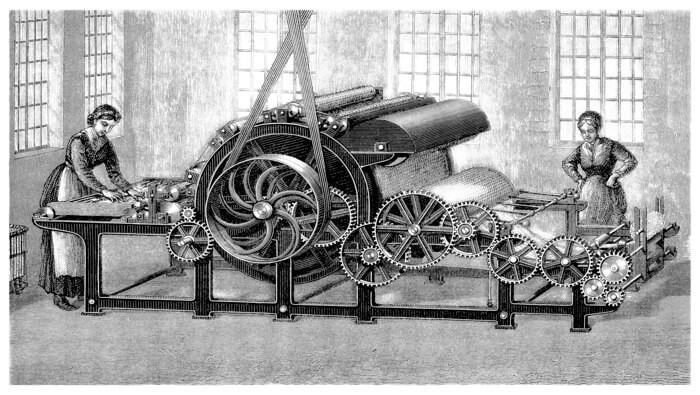
A Victorian-era industrial scene showing factories and smokestacks during the Industrial Revolution, when Britain became the Workshop of the World
🏭The Victorian Era🏭

Industrial Revolution for Kids

Discover how new machines, mighty factories, and the power of steam changed Britain β€” and the world β€” forever!

History Facts!

βš™οΈ What Was the Industrial Revolution?

The Industrial Revolution was a period when the way people worked and made goods changed dramatically. Before this time, most people lived in the countryside and worked on farms or in small workshops. Goods such as clothes, tools, or furniture were usually made by hand by one or two people.

During the Industrial Revolution, new machines were invented and large factories were built. These machines were often powered by steam engines that used energy from burning coal. This allowed factories to produce goods much faster and in much larger numbers than ever before.

Workshop of the World!

🏭 Britain β€” The Workshop of the World

During the Victorian Era, Britain became known as the β€œWorkshop of the World.” Before the nineteenth century, most countries had economies based mainly on farming or producing natural goods such as wheat, corn, wool, or timber. These materials were sometimes turned into products like clothing or furniture, but this was usually done on a small scale by individuals working in villages.

The Industrial Revolution, which began in England in the late eighteenth century and continued during Queen Victoria's reign, changed this system. Factories using coal-powered machines could make huge amounts of goods. As this happened, large factories employing hundreds of workers were built in growing cities such as Manchester and Newcastle. The goods produced there were then exported around the world.

Key Industries

  • 🧡Textiles β€” Cotton mills and weaving factories produced cloth at incredible speed
  • ⛏️Coal Mining β€” Coal powered the steam engines that drove the revolution
  • βš’οΈIron and Steel β€” Used to build machines, bridges, railways, and ships
  • πŸš‚Railways β€” Connected factories to ports and cities across the country

Life in the Cities!

🏘️ City Life and Factory Workers

Many people moved from the countryside to the cities to find work in these factories. However, life was not always easy for factory workers. Working conditions were often harsh, and wages were usually low.

Large slums appeared in the rapidly growing cities, where many poor families lived in crowded conditions. Even children worked long hours in factories to help their families earn enough money to survive.

These difficult living and working conditions were described in the stories and books written by the famous Victorian novelist Charles Dickens.

Charles Dickens's Famous Works

  • πŸ“•Oliver Twist β€” The story of an orphan boy surviving in the slums of London
  • πŸ“—A Christmas Carol β€” Ebenezer Scrooge learns kindness from three ghostly visitors
  • πŸ“˜David Copperfield β€” A young boy's journey through the hardships of Victorian life

Mysteries in Time
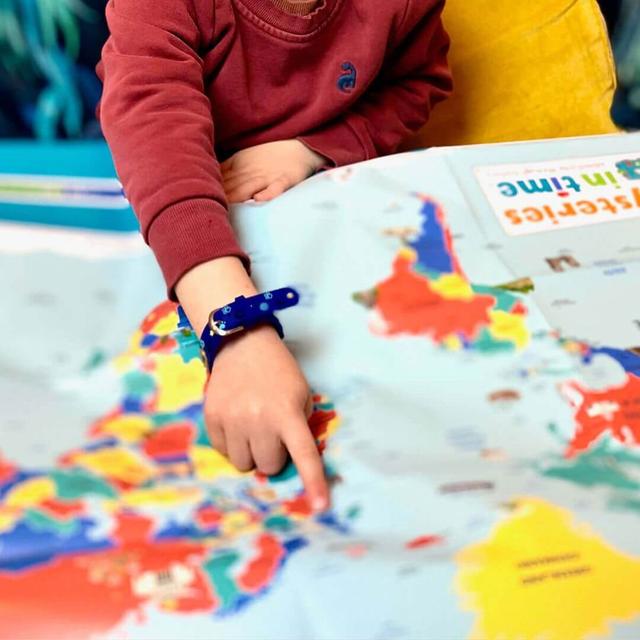
Mysteries in Time history activities for kids featuring an illustrated world map with historical landmarks

History Subscription Box for Kids

Bring History to Life β€” One Mystery at a Time

Turn history into an adventure! Stories, magazines, puzzles, crafts and hands-on fun β€” delivered straight to your door every month.

Loved by kids & parents
New era every month
Puzzles & activities
Start Your AdventureSkip or cancel anytime

As Seen In

Junior Magazine
Little London
Made for Mums
Mail Online
The Guardian
USA Today